Accounting That Understands the Real Estate Business
Real estate accounting sits at the intersection of operations, financing, long-lived assets, and tax. One acquisition can create land, a building, loan balances, escrow accounts, prepaid items, closing costs, and capitalized costs before the property ever produces a dollar of revenue.
KDW Tax & Accounting helps connect the books to the economics of each property or project. The goal is not simply to record rent deposits or renovation invoices. It is to maintain reliable basis and debt records, understand property-level cash flow and profitability, support tax planning, and know what the investment is really producing.
What Makes Real Estate Accounting Different?
Property-by-Property Accounting
Track income, operating costs, debt, capital spending, and owner activity by property or entity so consolidated books do not hide which assets are producing cash and which are consuming it.
Acquisitions, Closings & Basis
Settlement statements can contain purchase price, land and building allocations, loan proceeds, escrows, prepaid items, acquisition costs, and financing costs. Recording the closing correctly establishes the foundation for basis, debt, depreciation, and future gain or loss.

Repairs, Improvements & Rehab
Maintenance, repairs, replacements, renovations, and major improvements do not all receive the same accounting or tax treatment. The facts determine whether a cost is a current expense, a capital improvement, or part of a project.
Depreciation & Fixed Assets
Buildings, improvements, equipment, furnishings, and land need to be separated and tracked correctly. Placed-in-service dates, accumulated depreciation, later improvements, and asset dispositions all affect both the financial records and tax return.
Loans, Escrows & Cash Flow
Mortgage payments combine principal and interest, while lender escrows and reserves can create separate balance-sheet activity. Clean debt accounting is essential for understanding leverage, cash flow, and the true economics of a property.
Rental, Flip & Project Economics
A long-term rental, a house flip, and a development project can have very different cost flows and tax consequences. The books should reflect the business model so property and project profitability are not confused by generic expense coding.
Property Basis, Project Costs & Sale Treatment
Cash paid for real estate does not automatically become a current-period expense. Purchase costs and capital improvements may increase property basis, while rehab, development, and house-flip costs may need to be accumulated as project or inventory costs depending on the facts and accounting method. Depreciation changes adjusted basis over time, and a sale requires the books to reconcile original basis, improvements, accumulated depreciation, selling costs, debt payoff, and proceeds. Getting that treatment wrong can distort assets, depreciation, net income, taxable income, gain or loss, and property or project profitability.
CPA perspective: This is where bookkeeping classification becomes a basis, capitalization, depreciation, financial reporting, and tax-treatment decision.
How KDW Helps Real Estate Businesses
Clean property accounting creates the foundation for meaningful cash-flow analysis, defensible basis and depreciation records, reliable tax planning, and better investment decisions. KDW can help structure the books so the general ledger supports both compliance and management from acquisition through operation and eventual sale.
Books that show what each property is really earning.
Rent, operating costs, rehab spending, debt service, capital improvements, depreciation, and sale proceeds tell different parts of the story. Property-level accounting should bring them together so you can understand cash flow, basis, equity, and return—not just produce a consolidated year-end tax number.
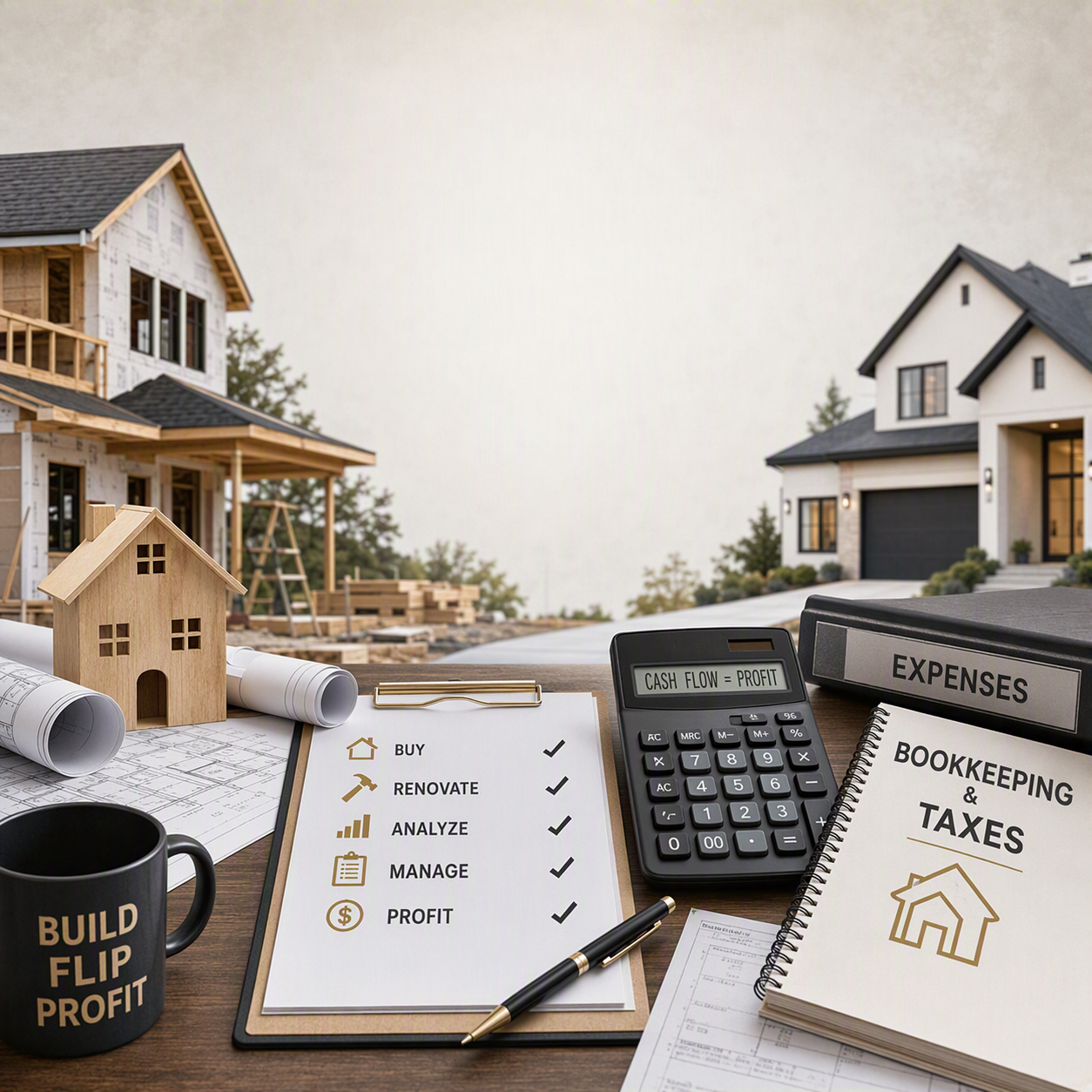
Know What Each Property Is Really Earning
Revenue does not tell you whether an investment is performing. Property taxes, insurance, repairs, management costs, utilities, vacancy, debt service, and capital spending can materially change cash flow and return.
Clean property-level accounting lets management compare operating performance, cash requirements, leverage, and capital needs. It also helps separate economic cash flow from taxable income, which can differ significantly because of depreciation, financing, and the timing of capital expenditures.
Plan for Taxes Before Year-End or the Deal Closes
Real estate tax planning often begins before the transaction is recorded. Acquisition structure, purchase-price allocation, financing costs, placed-in-service dates, improvements, depreciation choices, entity structure, estimated taxes, and the timing and structure of a future sale can all affect the result.
KDW connects accounting records with tax planning so the consequences of buying, improving, holding, refinancing, or selling property can be evaluated before the closing statement becomes a historical document.
Common Questions from Real Estate Businesses
How should a real estate closing statement be recorded?
A closing statement usually needs to be separated into the property acquired, land and building allocations, loan balances, escrow or reserve accounts, prepaid items, acquisition costs, financing costs, and any current-period items. Posting the net cash amount as one transaction can leave basis, debt, and future depreciation wrong from day one.
Are repairs and renovations immediately deductible?
Not always. Routine repairs and maintenance may be current expenses, while improvements, betterments, restorations, or adaptations may need to be capitalized. The treatment depends on what work was performed and the applicable accounting and tax rules, not simply the amount of the invoice.
How should costs on a house flip or rehab project be tracked?
Costs associated with acquiring and improving property held for resale may need to be accumulated as project or inventory costs rather than expensed as they are paid. The correct treatment depends on the facts and the taxpayer's accounting method. Tracking the project separately also makes it possible to measure the actual margin on the deal.
Can QuickBooks track multiple properties or real estate entities?
Yes, for many smaller real estate operations, but the design matters. Classes, locations, projects, or separate company files may be appropriate depending on entity structure, ownership, reporting needs, and transaction volume. The accounting system should preserve legal and financial separation while still producing useful property-level reporting.
Why can rental cash flow and taxable income look so different?
Loan principal payments use cash but generally do not reduce taxable income, while depreciation can reduce taxable income without using current cash. Capital improvements can also require cash before their cost is recovered over time. That is why management reporting should distinguish cash flow, accounting results, and tax results.
What needs to be reconciled when a property is sold?
The sale should tie together gross proceeds, selling costs, debt payoff, original property basis, subsequent capital improvements, accumulated depreciation, and other basis adjustments. Reliable records make the gain-or-loss calculation supportable and help prevent the tax return from being reconstructed from incomplete closing documents years later.
From Property to Profit.
KDW Tax & Accounting can help connect property income, operating costs, basis, debt, improvements, depreciation, cash flow, profitability, and tax planning across your real estate business.
Schedule a Free Consultation